Showing posts with label Zapiro. Show all posts

Friday, 27 September 2013

10 things you need to know if you move from Cape Town to Sydney


 Sydney is a pretty city, with the best food in the world from many nationalities. People live at peace with one another, even though they often stick to those they know and are not that welcoming of outsiders. You'll be safe here, but you have to work hard to fit in. Even though both cities are 34 degrees south, they are quite different. A bit of local knowledge might help. 

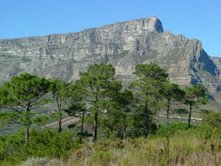
1. There is no mountain
And with that, no way of knowing which way you are facing. Amazing what you can discern from shadows if you work hard at it. You need to work out what season you are in, take into account the time of day, and then vaguely work out if the sun is north east or north west. It's not Table Mountain, but it works.

2. Flies like the inside of your mouth
Not only does Cape Town have very few flies, when they do appear, they like food. Not Sydney flies. They like the inside of your mouth. I know because I have eaten a fair few. Not on purpose, of course. What's good to know is that the Sydney flies are sluggish. My brother (yes, the famous Zapiro), used to pride himself in being the only person who could catch a fly on our kitchen table by grabbing it from behind. I kid you not. Sydney flies - hey - they move so slowly you hardly have to work to squash them. Go right ahead, I say.

3. Don't say "it was a thumbsuck"
In Cape Town if you are estimating something, it's a thumbsuck. You put your thumb in your mouth, pull it out quickly, make a popping noise and everyone knows you just guestimated the answer. Here, there's a strange look of disgust that crosses people's faces when you do that. I won't go into it. Just don't do it.

4. Don't say "holding thumbs"
Refer to number 3 above. I don't have to go into detail, but the same look crosses Sydneysiders' faces when you say "hold thumbs for me". In Cape Town, it means the same as "cross fingers" for me. Believe me - just ask people to cross fingers. You'll have a far better response!

5. Save hard to use public transport
Because the Rand is so abysmal next to the Aussie Dollar, there have to be some money tips in a blogpost like this. There's nothing more demoralising realising that your whole week's budget has been used on public transport. It's expensive in Sydney. I mean really expensive. In 2013 it costs $10 (or R100) to get a return to the city at peak times. Travel after 9am. Buy travel tens when you can (busses, ferries). And get an Opal Card as soon as you can. They are being phased in - but where you have occasion to be somewhere for less than an hour you are charged only one leg of a return journey. You can, for instance, travel to Town Hall, have a 50 minute meeting, and get back on the return train and you'll only be charged one way. In some cities there are free busses. Use them. Better still, walk.

6. Most great performers at festivals also have a free performances
Check it out. It's worthwhile. People pay $100's of dollars to see great performers (that's 1000's of Rands) when you can often catch them in free venues. Do your research

7. Check out and compare mobile plans
Talk about doing your research - work hard at finding a mobile plan that offers unlimited text and voice calls and a lot of data. It's the best investment you'll make. You can find all the cheap deals - and there are cheap deals for everything (almost).

8. Use 131500
This is a great get-everywhere-planner. You can dial it and speak to a real person or you can go to www.131500.com.au and feel completely cool about finding your way to anywhere. Times, modes of transport - it's all there.

9. Don't be demanding
South African have a reputation in Sydney for being incredibly pushy, entitled and just plain rude. There's a reason for this. We are. As a rule. We are too direct for most people living in Sydney. We are spoilt either because we were privileged in South Africa and have learnt to expect people to be there for our every whim, or we are demanding because we weren't privileged but we know what it is to have to ask for things to happen. By all means stick to your guns when expecting good service (not a high point in Sydney) or expecting people to be welcoming or whatever other reasonable expectation you have. But watch your body language and your way of speaking to people - there is a very strong "entitled-South-African-detector" in many Sydneysiders. The most frequent back-handed compliment I have received in Australia is "You're South African - and you're nice? How come?"

10. Hang out at the Opera House and surrounds
Sydney is known as being "up itself" - that's Australian for being too big for it's boots - in many ways. But the Opera House, and the harbour - they are just magic. Hang around at dawn, hang around in the middle of the day, hang around at night. Enjoy the Botanic Gardens and the fruit bats. Enjoy the fantastic walls that are shaped as benches. They're made to enjoy so enjoy them.  Specially at the Opera Bar. Yes, a drink could cost the same as a day's earnings - but hey - you only live once. And you can always consider how crazy some people are that they are paying $1000 for a bottle of bubbly - yep, that's R10,000 and enough to feed a village in Africa for a very, very long time. Yes, the contrast is crazy. It's First World, Third World stuff. And it never goes away (why do you think I work with social enterprise and creating beyond win-win solutions... that's another story).

Oh, and one more thing. People who live in Sydney are called Sydneysiders. Just good to know.


Thursday, 11 February 2010

20 years of Freedom for Nelson Mandela

Meeting Mr Mandela at Broederstroom in 1994, at our Juvenile Justice for South Africa conference

In 1994 I had the wonderful privilege of meeting Mr Nelson Mandela. It's a story worth telling. But today I am remembering the day Nelson Mandela was released from Pollsmoor. It was the 11 February 1990, exactly twenty years ago. I was cooking at a camp for kids from my old Cape Town school, Westerford. We were in Onrust, not far from Hermanus (which is about an hour and a half from Cape Town). Someone wandered into the kitchen and announced, quite casually, that Nelson Mandela was about to be released from prison. My heart skipped a beat. It seemed completely impossible.

All over the world people would have been having the same reaction. This amazing day had seemed well nigh impossible until just before the announcement. The fight against Apartheid over the few previous years had become more and more intense, with more and more hope, yet this dream had still felt like it was a long way off. The pain and suffering of the Apartheid era was all around us, and we had seen many people detained in the late eighties. We'd heard terrible stories of beatings and torture and had known many people in hiding from the security police. Three people in my immediate family had been detained between 1985 and 1988. We knew we were amongst the lucky ones - others, mostly black people, had not been as lucky and had lost family members to the abuses of the system.

I felt as if I should not show too much jubilation. 1990 was still a time of mistrust and I didn't know quite how to react. I wanted to leave immediately and watch the moment of freedom for this remarkable prisoner of 27 years. If my memory serves me, the camp organisers felt the same, and the camp ended early so we could all head back and see the big moment on TV.

I set off as fast as I could, and found myself at a petrol station on the highway at the time that we expected Mandela to be released. I parked my car and hoped I'd find a TV somewhere. There was one. It was in the tiny room that was used by the petrol attendants during night duty and had just a single bed and a small TV on a table. It was afternoon, and around10 people had crowded into the room. They were a fabulous cross-section of South Africa - black people, white people, Afrikaans, English and Xhosa speaking people. They were old, and they were young. And we were all glued to the screen.

Suddenly, there he was. The old man who noone had been was allowed to take pictures of during his 27 year stint in prison. Mr Nelson Rolihlahla Mandela taking his first steps to freedom from prison with Winnie Mandela on his arm. What a dignified man! What an aura! And what quiet power as he raised his right fist. Yes, this was the man we'd been waiting to see.

I raced back to Cape Town. Parking in District Six, about a kilometer from the city, I joined a huge group of people "toy toying" down to the Grand Parade where Mr Mandela was to address the people from the Town Hall balcony. The crowd was restless. They had been waiting there since morning. People were pushing forward, surging towards the Town Hall. Rev Allan Boesak (who was later disgraced in a funding scandal) was urging people to hold back in a bellowing, amplified voice that did nothing to still the restless crowd, but rather seemed to egg them on to a greater frenzy. The crowd pushed ever forward. I kept my distance. Crowds had always scared me, especially the mass protests of the recent years. I knew I couldn't run as fast as my friends when the cops chased us.

Finally Mr Mandela arrived. I remember him cutting such a fine figure up on that balcony. And I particularly remember his wonderful voice that we would all grow to know so well holding the attention of each and every person in the throngs of South Africans who had waited hungrily to hear his words all day, and for some, all their lives. What an utterly historic moment, and what an utter privilege to be there.

The years that followed were filled with hope and promise, and working at NICRO at the time gave me a platform for the optimism I felt so strongly. It also was directly responsible for putting me in the right place at the right time to later meet Mandela. However, things in South Africa are a bit different now, twenty years on, with crime and wide-spread poverty ravaging the country. The damage of years and years of Apartheid continue to take their toll. And worse still, an immoral President Zuma is creating an increasingly dissatisfied electorate (while providing unending fodder for my cartoonist brother, Zapiro's, pen!).  The leadership of that country is nothing compared to the years under Mandela, but political freedom continues. Mandela set the tone for perhaps the greatest modern democracy on earth, and I hope against hope that South Africa can find the Mandela factor in the coming years. The movie Invictus reminds us of where South Africa was headed, and all South Africans whether living at home or abroad, need to take responsibility to let Mandela see the South Africa of his dreams in these, his twilight years. Viva, Madiba! Viva.

Photo of Nelson Mandela and Rosemary Shapiro-Liu by Nigel Branken

Friday, 9 October 2009

ZA News Mandela Puppet at the Seder Table

One Passover, many moons ago, I arrived at the Shapiro family home in Rondebosch, Cape Town. Can you imagine my surprise and delight to find Mr Mandela at the seder table? My brother Jonno, aka Zapiro, had reserved a seat for him with our family for the night.

And here he is - the first of the prototypes of the puppets launched this week at ZA News. This is one my most treasured old photos: Madiba and me at Pesach in the 90's.

Wednesday, 7 October 2009

ZA News is launched in Cape Town

Jonno's book launch, 2004. One of the last Zapiro events I was able to be at in Cape Town. That's what happens when siblings move to other countries!

I love the entrepreneurial spirit in South Africa. The resourcefulness, the innovation, the excitement that accompanies great ideas. For nearly 10 years now, the puppets created by Zapiro for ZA News have not been aired - TV stations have gone against that South African experimental mood, have blocked the artistic brilliance and quite frankly been what I would call Un-South African. But perhaps that's after living in Australia for a while where there's a constant debate about what is Australian and Un-Australian. But I digress.

Yesterday Kulula.com, whacky as they are, and the Mail and Guardian partnered ZA News and launched the news by the Spitting Image inspired puppets. The secret to the successful screening? Using the internet, and sidestepping television altogether.

I've never been more proud of the work my brother, Jonathan, is involved with. This time with Thierry Cassuto. There's very little to say other than "Go Jonno and colleagues!! ZA News is fantastic".

You can see some of the real ZA News and the Media Launch at the ZA News site http://www.zanews.co.za/ or the Mail and Guardian site http://www.mg.co.za/zanews

Tuesday, 13 January 2009

Let there be logic (and freedom of speech)

Thank goodness some sense prevails in South Africa. The South African Appeals Court has overturned a high court ruling dismissing corruption charges against Jacob Zuma, the president of the ruling African National Congress (ANC). In effect this means that charges against Zuma can, and might well, go ahead.

Ironically, in a rally last week Zuma announced that his party would clamp down on corruption. One hardly needs cartoons to see how ludicrous such a public announcement is, coming from him. But cartoons there have been, and cartoons there will be as this strange-but-true story unfolds in the ever dynamic South African political landscape.

Zapiro's controversial cartoon on Zuma and the Independent Judiciary (see the Zapiro website) continues to cause a great deal of debate. On Facebook where he has a huge following someone wrote today:
"As long as Zapiro is in our beloved country's newspapers I know that democracy and freedom of speech are alive and kicking in South Africa, keep it up!"
. The cartoon, and the role of the judiciary, continues to be debated on public fora, in newspapers, on the radio and at dinner tables not only around South Africa but abroad. I have heard debate on Zuma and Mbeki and the judiciary centred around the controversial cartoon here in Sydney. Zapiro is currently being charged by Jacob Zuma for defamation...

I wait with baited breath as the elections in South Africa draw close. Who knows what the next few years hold, but about one thing I am sure: South Africa remains one of the most resourceful, innovative and dynamic places I have known, and it's political stage is one of the most colourful and fascinating of the moment.