Showing posts with label Rosemary Shapiro-Liu. Show all posts

Tuesday, 29 October 2013

Nine years in Australia

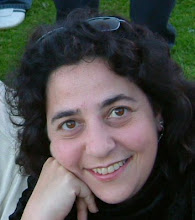
Jethro's take on his mummy: he took this 28th October 2013


Nine years ago, to the day, I arrived in Australia. It was a profound feeling. I was 41, and my life was starting over.

I remember Francis meeting me at the airport and feeling particularly awkward. I remember thinking that nothing could make him understand what was going on inside me, and that I wasn't going to try to explain. I was just going to get on with it.

I noticed that so many people leaving South Africa were running from something, and I wasn't. I was going TO something. I was going to a new life with a man I had met in Spain, learning Spanish. I was seriously starting again. Life was changing:
- from being single to being part of a couple
- from being well known to completely unknown.
 - from a life of dance and consulting to a life of little dance and no permission to work.
 - from years of experience to not being recognised for any experience.

I had left my home with four bedrooms plus a flat for a shared room in a shared unit. I had left being a landlady for being a partner of a renter. I had left a huge circle of family and friends and colleagues for a country where I knew one person well, two more people quite well, and about ten people vaguely. I had left the mountain and sea for the suburbs.
Instead of a house filled with belongings I had just one suitcase with my clothes and my cutlery (!). Instead of a car I was on foot.

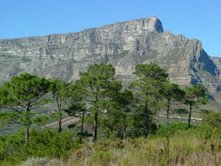
Yes this was still 34 degrees South. Just not Cape Town. It was Sydney.

Some of this was apparent on the first day, and some only became apparent over time. Slowly but surely it sank in that I'd really taken this enormous step at 41. It was my sister-in-law's birthday and I wasn't there to celebrate it. Today, nine years later, it's her birthday again and I'm not there to celebrate it. But I am celebrating, instead, a nine-year journey to date.

I woke this morning thinking about the highlight of each year:
2004: Discovering the tango, flamenco, latino dance and music scene in Sydney and my first New Year's Eve fireworks over the Bridge and Opera House
2005:  A five day trip, alone and camping, to the heart-stopping beauty of New Zealand's South Island; buying our home in Heighway Avenue in Ashfield and joining Sing Australia
2006: Our wedding; visitors throughout that year from South Africa
2007: Being allowed to work. Restarting Making Things Work. Dancing Tango at Darling Harbour. 
2008: Magical trip to Europe with Francis
2009: Jethro was born. Becoming a mum at 46. Starting to work with social enterprises in earnest.
2010: Jethro's baby naming ceremony. Becoming an Ausralian Citizen. Taking Jethro to South Africa to meet the family.
2011: Marjorie's visit to Sydney; An African drumming course
2012: Moving to Oatley to the green and the blue of nature once again
2013: Marjorie in Sydney again. Embarking on the Key Person of Influence course and restarting my work as Beyond Win-Win.

And then, of course, there have been the annual highlights - Jewish high festivals on the North Short and the Eastern Suburbs, re-acquainting with cousins I knew as a child in South Africa, annual Christmas celebrations (the street party in Heighway Avenue, the Mother's Group party and the Chilean-Iranian-South African-Australian party each year), Chinese New Year and all the diversity type celebrations in Sydney. And lots, lots more.

Today I am celebrating a long journey that, in the scheme of things, is only just starting. It's amazing, though, that I've lived in Australian almost one fifth of my life. Just one more year and it will be a decade. Hah.



Sunday, 11 July 2010

South Africa the Great!


Lynne Thackeray's "Adderley Street" during the FIFA World Cup in in South Africa, 2010

It has been the wierdest thing being in Sydney while South Africa shows off her true colours. I just love what people have seen - I love what has happened there. Far from the predicted massacres of international tourists, thousands upon thousands of people have been bouyed by the joyousness of a country with a miraculous history and, more importantly, a wonderful future. And the World Cup has been an integral part of the South African story, showing that it is indeed possible for South Africa to take a break from the daily grind of  constant and violent crime. Well, as far as we hear. 

John Carlin, writing in Yes, South Africa can, says:
The society is great, and it is the reason why (never mind the safari parks and the fairest Cape) so many of us foreigners who've spent time here find this country more beguiling than any other on Earth. Ordinary people have so much more wisdom, grit, resilience, invention, courage and generosity than you find in most countries.
Shame on the television stations in Australia prior to the games - shame on their coverage of South Africa. Shame on the journalists who showed us only the back streets of brothel-laden areas, the police who were unable to deal with crime, the drug-dealing on the street. Shame on them for casting fear into the hearts of anyone who would have thought of visiting South Africa. Shame on them for not showing people dancing and singing and living the way South Africans do - with great angst, but with even greater joy. Shame on them for not showing the incredible diversity of life in South Africa - including the incredible highs of being in such a vibrant society - and expressing at least some optimism.

Yes, South African has some deep traumas, not least the poverty and high levels of HIV AIDS. And gender violence. But it is a country with grit and guts and resilience, as John Carlin says. And long may that continue.

Pictures below: 
At the Stadium, by Bev Cohen. 
The Oranje Bus, by Nicky Thompson. Staff at Dementia South Africa, by Lynne Thackeray.  


Jacque Marais' amazing Vuvusela photo, from Facebook. For great World Cup pictures, go to Jacque Marais's photos here

Thursday, 11 February 2010

20 years of Freedom for Nelson Mandela

Meeting Mr Mandela at Broederstroom in 1994, at our Juvenile Justice for South Africa conference

In 1994 I had the wonderful privilege of meeting Mr Nelson Mandela. It's a story worth telling. But today I am remembering the day Nelson Mandela was released from Pollsmoor. It was the 11 February 1990, exactly twenty years ago. I was cooking at a camp for kids from my old Cape Town school, Westerford. We were in Onrust, not far from Hermanus (which is about an hour and a half from Cape Town). Someone wandered into the kitchen and announced, quite casually, that Nelson Mandela was about to be released from prison. My heart skipped a beat. It seemed completely impossible.

All over the world people would have been having the same reaction. This amazing day had seemed well nigh impossible until just before the announcement. The fight against Apartheid over the few previous years had become more and more intense, with more and more hope, yet this dream had still felt like it was a long way off. The pain and suffering of the Apartheid era was all around us, and we had seen many people detained in the late eighties. We'd heard terrible stories of beatings and torture and had known many people in hiding from the security police. Three people in my immediate family had been detained between 1985 and 1988. We knew we were amongst the lucky ones - others, mostly black people, had not been as lucky and had lost family members to the abuses of the system.

I felt as if I should not show too much jubilation. 1990 was still a time of mistrust and I didn't know quite how to react. I wanted to leave immediately and watch the moment of freedom for this remarkable prisoner of 27 years. If my memory serves me, the camp organisers felt the same, and the camp ended early so we could all head back and see the big moment on TV.

I set off as fast as I could, and found myself at a petrol station on the highway at the time that we expected Mandela to be released. I parked my car and hoped I'd find a TV somewhere. There was one. It was in the tiny room that was used by the petrol attendants during night duty and had just a single bed and a small TV on a table. It was afternoon, and around10 people had crowded into the room. They were a fabulous cross-section of South Africa - black people, white people, Afrikaans, English and Xhosa speaking people. They were old, and they were young. And we were all glued to the screen.

Suddenly, there he was. The old man who noone had been was allowed to take pictures of during his 27 year stint in prison. Mr Nelson Rolihlahla Mandela taking his first steps to freedom from prison with Winnie Mandela on his arm. What a dignified man! What an aura! And what quiet power as he raised his right fist. Yes, this was the man we'd been waiting to see.

I raced back to Cape Town. Parking in District Six, about a kilometer from the city, I joined a huge group of people "toy toying" down to the Grand Parade where Mr Mandela was to address the people from the Town Hall balcony. The crowd was restless. They had been waiting there since morning. People were pushing forward, surging towards the Town Hall. Rev Allan Boesak (who was later disgraced in a funding scandal) was urging people to hold back in a bellowing, amplified voice that did nothing to still the restless crowd, but rather seemed to egg them on to a greater frenzy. The crowd pushed ever forward. I kept my distance. Crowds had always scared me, especially the mass protests of the recent years. I knew I couldn't run as fast as my friends when the cops chased us.

Finally Mr Mandela arrived. I remember him cutting such a fine figure up on that balcony. And I particularly remember his wonderful voice that we would all grow to know so well holding the attention of each and every person in the throngs of South Africans who had waited hungrily to hear his words all day, and for some, all their lives. What an utterly historic moment, and what an utter privilege to be there.

The years that followed were filled with hope and promise, and working at NICRO at the time gave me a platform for the optimism I felt so strongly. It also was directly responsible for putting me in the right place at the right time to later meet Mandela. However, things in South Africa are a bit different now, twenty years on, with crime and wide-spread poverty ravaging the country. The damage of years and years of Apartheid continue to take their toll. And worse still, an immoral President Zuma is creating an increasingly dissatisfied electorate (while providing unending fodder for my cartoonist brother, Zapiro's, pen!).  The leadership of that country is nothing compared to the years under Mandela, but political freedom continues. Mandela set the tone for perhaps the greatest modern democracy on earth, and I hope against hope that South Africa can find the Mandela factor in the coming years. The movie Invictus reminds us of where South Africa was headed, and all South Africans whether living at home or abroad, need to take responsibility to let Mandela see the South Africa of his dreams in these, his twilight years. Viva, Madiba! Viva.

Photo of Nelson Mandela and Rosemary Shapiro-Liu by Nigel Branken

Saturday, 6 February 2010

The last Riverboat Postman

Just north of Sydney, an hour from my door by foot and train, is the incredible Hawkesbury River. There the thickly forested islands and peninsulas rise out of the water and are a haven of indigenous flora and fauna. The area is somewhat reminiscent of Asia, and it is there that I can find the greenery and bluery I miss so much living in Ashfield. Transport costs just $13.60 at peak hour for a day return and $9.40 off peak.Well worth it, I must tell you.

I propose a trip at peak hour so that you can get there by 09h00. That way you can catch Australia's Last Riverboat Postman at 09h30 (Mondays to Fridays) for a four hour excursion through the Hawkesbury delivering post and some supplies to the otherwise unreachable islands and forested peninsulas. Unfortunately the Riverboat Postman is not cheap as an experience, but I think it's worth it. I hear the area and stories of it's inhabitants have been captured in the Australian movie, the Oyster Catcher, but I have yet to see it. The boat trip is a step back in time, and comes complete with a cup of tea and a very ordinary biscuit. The tea, though, is served with great pride by a chap who will tell you the story of how he learnt to make a great cup of tea from his mum. At each stop, the boat pulls up to the shore to be met by someone sending mail and receiving mail. Some of these people look as if they haven't left the Hawkesbury in a while - and I'd have to admit that some reminded me of forest gnomes. And if you're lucky you'll see a dog or two coming down to the short with a human. The dog waits patiently, and gets a daily biscuit. Unfortunately it shows. There's not much space to run around on the thickly forested shoreline, and there are dense forests right to the edge of the water. The daily biscuit combined with a lack of exercise could be the start of Jenny Craig's programme for dogs.

It's good to catch the train to arrive by 09h00 to be at the Brooklyn Wharf, right next to the train station to get your ticket and secure a good place on the boat. The upper deck is a great vantage point - complete with plastic chairs and serious sun. You'll need a hat, sunscreen and sunglasses. Downstairs, inside, you'll find shade and large windows and a supply of things to keep kids happy (books, crayons - well, they were there the last time I went). It's best to  book as sometimes travelers fill the boat, and sometimes school children going to camp at Milson Island.

Don't say you weren't warned about the stairs at the Hawkesbury River station - a huge flight of steps gets you off the platform and another gets you down to the water level. The 360 degree view from the top of the stairs is worth the climb! And you'll spot huge pelicans perched precariously on bollards and local residents arriving at the Brooklyn wharf in tinnies, complete with a dog each!

Lunch can be fish and chips at one of the local restaurants in Brooklyn where you disembark, and if you feel up to it a 25 minute walk along the road towards the highway will get you to the Brooklyn on Hawkesbury Apartments. An old convent has been converted into a number of apartments that are surprisingly inexpensive to hire, and seriously fun. One of the apartments is in the old church itself and is whacky, to say the least. There there is a pool overlooking the water, and lots of kookaburras, corellas, cockatoos and other birds. The marina is right in front of the apartments, and most have a view over the water. Three minutes back towards Brooklyn on foot you can hire tinnies. I've done that a few times which gets one up close and personal with the huge jellyfish that the Riverboat Postman bumps up against each day on it's trip around the bays.

I once came across a woman who told me that her grandmother had been dropped at the Convent during the second world war at the age of seven with her little sister, then five. They were left there as their parents had fallen on hard times, and they didn't know if and when they would be collected. Apparently two years later their parents managed to take them back. That story remains has added some texture to my holiday experiences at the converted convent, I must say.

The apartments are self-catering as there are no places to eat nearby, other than in Brooklyn itself. A 25 minute walk back to the village at night is sometimes more exercise than one wants after chilling out for the afternoon at the pool. Instead a bbq outside the apartment seems a much better option. Of course you could choose to take a car to the Hawkesbury and that would give you a bit more freedom to move around - especially if you have more time. Mooney Mooney and Woy Woy are nearby, and both offer some eating options.

So my proposal is:
Between 07h30 and 08h00: Take a train to Hawkesbury River with either a day return or a single ticket if coming back the next day.
09h00: Arrive at Hawkesbury River and buy a ticket for the Riverboat Postman
09h30: Board the boat for the trip through the Hawkesbury
13h30: Lunch in Brooklyn
14h30: a walk along the path around the area to the right of the boat mooring, at the level of the water, to where the boats launch and the pelicans gather
15h00: Go up the steps on the way back to what could be called a low promontory. Look out for bush turkeys and take in the views through the Eucalypts. There's a clean public loo up there
15h30: Walk down the hill towards the place where you boarded the Riverboat Postman, take a few steps to your right and pop into the water for a swim, safely behind the jelly-fish netting
16h00: Walk to the Hawkesbury Apartments (25 minutes) on the main road back towards the highway and book in for the night. Relax, have a swim, prepare the BBQ and enjoy!

Next day take a tinny out for a couple of hours before making your way back. There. That's my idea of two days of heaven. Hope you think so too.

See where you can catch the Riverboat Postman   Map

Friday, 9 October 2009

ZA News Mandela Puppet at the Seder Table

One Passover, many moons ago, I arrived at the Shapiro family home in Rondebosch, Cape Town. Can you imagine my surprise and delight to find Mr Mandela at the seder table? My brother Jonno, aka Zapiro, had reserved a seat for him with our family for the night.

And here he is - the first of the prototypes of the puppets launched this week at ZA News. This is one my most treasured old photos: Madiba and me at Pesach in the 90's.

Tuesday, 27 January 2009

Real Conversation at the Citizens Parliament


Prime Minister Kevin Rudd, Australian of the Year Prof Mick Dodson and Adam Gilchrist.
Sydney Morning Herald, 26 January 2009.

Australia has entered a new era of debate. Not always comfortably, but certainly noticeably. One of Kevin Rudd's first projects after becoming Prime Minister was to call the 20/20 summit. His plan was to discuss the important issues affecting Australia with ordinary people. His detractors were quick to say that he was all talk and no action. I beg to differ. One his first, and certainly his most powerful action to date, was to say Sorry to the Aboriginal people of Australia. That was serious talk, and serious action. It shifted Australia on its axis forever (to borrow a phrase from my older sister, Yvonne).

Kevin Rudd's style continues to encourage debate. I have noticed a tangible shift in conversation since his election in 2007. When I arrived in Australia in 2004, in the 8th year of the Howard government, talk was not encouraged. Debate was discouraged. So were big ideas (I remember the CEO of the Australian non-profit where I worked raising her hand to me in a "talk to the hand" gesture and stating loudly "Thank you very much, Rosemary. We don't need any more Big Ideas. What we need is people at their desks").

The past 12 months have been different. I have seen, and been part of, lots of meaningful and action-directed talk, both at dinner-table level and in organisations. I have seen some great conversation in WILPF (Women's League for Peace and Freedom), some of which I have facilitated. The Apology led the way, and 20/20 offered a new openness.

However, today Mr Rudd has disappointed me. Prof Mick Dodson, named yesterday as the 2009 Australian of the year (he is a long-time activist and one of the authors of the 1997 "Bringing Them Home" Report) , has raised a question many have asked. He queries whether the 26th of January, the anniversary the 1788 First Fleet in Australia, is the right date for Australia Day. To some, Australia Day is Invasion Day and there are alternative celebrations that are not about beer swilling, flag-wearing, okker Australians, but about remembering the death and destruction those first settlers brought to this country, to some of the oldest peoples on earth.

The question Prof Dodson is asking is simply this: should we choose a day that represents the pride and national feeling of all Australians, a day that perhaps has less mixed feelings for some. Prof Dodson, at his own admission, is not as concerned about whether this happens or not, as he is about the fact that a conversation is needed.

Which brings me to why Mr Rudd has disappointed me. His answer was reported to be a flat "no". To my mind I don't think that's much of a conversation. Prof Dodson has another view - he said on TV this morning that perhaps that is the conversation: a question has been raised, and an answer has been given. Personally I think he's being quite big about it.

What will be interesting, and what I am thoroughly looking forward to, is the Citizens Parliament to be held in Canberra in the first week of February. This, I think, is a real conversation. As stated on the Citizens Parliament website, in answer to the question "Who Runs the Citizens' Parliament" :
Ultimately, it belongs to the participants. The organisers are researchers from Australian National University, The University of Sydney and Curtin University, in conjunction with the newDemocracy Foundation. The Citizens' Parliament is co-chaired by Hon. Fred Chaney AO and Dr. Lowitja O'Donoghue AC CBE DSG. Participants will be guided by facilitators and assisted by researchers and volunteers.

Apparently the recommendations will be published and presented to the Prime Minister and all Members of Parliament. The idea is that the recommendations will be considered by the Government and widely discussed in the media.

I am thrilled to be one of the team of volunteer facilitators at this event. My consultancy, Making Things Work, is aimed at working in just this arena. I have no idea what will be expected of the team of facilitators, save to say that they will be very long days! And that there will be a lot of Open Space methodology, something I have worked with for years and found to be super-effective. Our briefing session in Canberra the day before the event will prepare us for the task at hand. The website has the following to say:

Facilitators ensure that everyone has the opportunity to express themselves and encourage a generous and empathetic response from listeners. Facilitators ask open questions that require reflection and consideration, to help participants find deeper understanding of the topic at hand. They don't express any favouritism--they invite participants to object if any bias is perceived, even if it is unintentional. Facilitators encourage respectful and constructive dialogue, but won't intervene unnecessarily. Importantly, facilitators of deliberative processes do not push participants to reach a consensus.
Sounds like a fabulous opportunity for real conversation between 150 randomly selected delegates. Now perhaps Mr Rudd and Prof Dodson could join us for a guest conversation that does not just start with a question and end one minute later with a definitive answer!