Monday, 30 June 2014

Between 34 and 48 degrees north

I love all things 34 degrees south. I grew up in the gorgeous Cape of Good Hope, traveled and danced the tango in Buenos Aires and have lived in Sydney for a decade. I love and have written about these three cities - they have different attractions but I am at home in each of them. I am convinced that if I traveled the 34 degree south line around the world I would find many other places to feel at home in.

I've recently discovered that I'm rather partial to the 38 to 44 degree North part of the world too. Well, at least those parts of Italy and Spain. Cinque Terra, the 'five lands' - the villages that run along the Ligurian coast in Italy - is gobsmackingly beautiful. Every view is a postcard perfect, and the small towns just ooze with Mediterranean charm. No sooner had we discovered the gelato coloured buildings and the men who walk their dogs and sing in operatic voices, the extraordinary architecture that allows the houses to cling to one another in a tumble of old dwellings threatening to fall into the Mediterranean, than it was time to leave and embark on a new journey of villages.

We headed for Valencia, to a the tiny town of Benirrama, the first of 8 pobles (pueblos) in the dry, mountainous cherry-rich Vale de Gallineri. We paid the scammy car hire place the quoted $49 for a week of car hire plus the gazillion dollars for insurance, and headed up impossible winding, narrow roads, on the right hand side in a manual car. Jethro and Francis reminded me helpfully (and regularly, in unison) to 'drive on the right, look to the left'. A useful reminder at dusk in the mountains in unfamiliar territory. I silently thanked my lucky stars that Francis and I travel well together as we negotiated traffic circles that the sat nav didn't recognise and I clutched the steering wheel, white knuckled.

The east of Spain is littered with buildings that have been started in a time of optimism and left in a time of financial difficulty. The massive river in Valencia last flowed many years ago, so the seene is somewhat apocalyptic with stony dry mountains,  silhouettes of half finished buildings and prostitutes standing on the highway as the trucks race by. We could hardly have been prepared for the stark beauty of route of the 8 Pueblos of the Vall de Gallineri (the Gallineri Valley). On the other side of a series of tunnels, ringed by majestic mountains are the ancient villages, created in part by religious zealots and barons of the 12th to 18th centuries. Their charm probably equals the cruelty of the local wars of the time, but their beauty has endured. They have a certain romantic charm that visitors like us can't resist.

Like the Cinque Terra, these 8 villages are built with an architectural genious that allows them to last through the ages and serve the various generations that have farmed there. Benirrama, where we were lucky enough to stay, is the first of the 8 villages and was named after the family Rrama of Arabic descent. Beni means 'son of' and most of the villages in the area are Beni-something. Some are hard to pronounce, and the similarities in names makes the already difficult task of remembering where you've been on holiday well nigh impossible - names like Beniali, Benissiva, Beniaia and Benitaia then La Carroja and Al Patro. After a few days of driving and eating in these villages - the Menu Del Dia in some of the establishments is worth a visit to this area - we found the last name we came across hilarious. It was Benimarfull, which became known to us as Beni-mouthful.

In the Vall de Gaillineri May is the season of Cervasas (cherries). Everywhere we went we were offered cherries - plump, deep red and overflowing texture and juice. The boughs on the trees were heavy with cherries and driving the narrow mountain roads we could reach out of the windows and pick them as we drove, spitting the pips as far as we could - something the locals do as a sport. The giving of cherries in the Val de Gallineri is a sign of hospitality, of warmth, and of abundance. Neighbours pop in with plates of cherries. Bars offer cherries as you walk in. And most meals end with a big plate of cherries proudly offered from the tree of the gift-bearer.

We city folk were not so good at working out what the green things were on the trees - there were olive trees and bean trees and green-thing trees which turned out to be the tastiest apricots when they ripened. Most backyards had lemon trees groaning with lemons. We rescued the lemons that had fallen in our back yard and made lemonade and lemon preserve.

There, in the mountains, our little family went about our business with not much contact with anyone. The next week was quite different - a heavily discounted Mediterranean cruise that took us to Rome, Naples, Barcelona, Marseilles, Savona and back to Rome. A great experience being on a floating home that drops you at the door of each place you want to explore.

All this time between 38 and 44 degrees north has been exceptional, and even though I am a committed 24 degrees south person, I know we'll be back. I can't recommend it highly enough.

Tuesday, 29 October 2013

Nine years in Australia

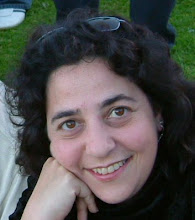
Jethro's take on his mummy: he took this 28th October 2013


Nine years ago, to the day, I arrived in Australia. It was a profound feeling. I was 41, and my life was starting over.

I remember Francis meeting me at the airport and feeling particularly awkward. I remember thinking that nothing could make him understand what was going on inside me, and that I wasn't going to try to explain. I was just going to get on with it.

I noticed that so many people leaving South Africa were running from something, and I wasn't. I was going TO something. I was going to a new life with a man I had met in Spain, learning Spanish. I was seriously starting again. Life was changing:
- from being single to being part of a couple
- from being well known to completely unknown.
 - from a life of dance and consulting to a life of little dance and no permission to work.
 - from years of experience to not being recognised for any experience.

I had left my home with four bedrooms plus a flat for a shared room in a shared unit. I had left being a landlady for being a partner of a renter. I had left a huge circle of family and friends and colleagues for a country where I knew one person well, two more people quite well, and about ten people vaguely. I had left the mountain and sea for the suburbs.
Instead of a house filled with belongings I had just one suitcase with my clothes and my cutlery (!). Instead of a car I was on foot.

Yes this was still 34 degrees South. Just not Cape Town. It was Sydney.

Some of this was apparent on the first day, and some only became apparent over time. Slowly but surely it sank in that I'd really taken this enormous step at 41. It was my sister-in-law's birthday and I wasn't there to celebrate it. Today, nine years later, it's her birthday again and I'm not there to celebrate it. But I am celebrating, instead, a nine-year journey to date.

I woke this morning thinking about the highlight of each year:
2004: Discovering the tango, flamenco, latino dance and music scene in Sydney and my first New Year's Eve fireworks over the Bridge and Opera House
2005:  A five day trip, alone and camping, to the heart-stopping beauty of New Zealand's South Island; buying our home in Heighway Avenue in Ashfield and joining Sing Australia
2006: Our wedding; visitors throughout that year from South Africa
2007: Being allowed to work. Restarting Making Things Work. Dancing Tango at Darling Harbour. 
2008: Magical trip to Europe with Francis
2009: Jethro was born. Becoming a mum at 46. Starting to work with social enterprises in earnest.
2010: Jethro's baby naming ceremony. Becoming an Ausralian Citizen. Taking Jethro to South Africa to meet the family.
2011: Marjorie's visit to Sydney; An African drumming course
2012: Moving to Oatley to the green and the blue of nature once again
2013: Marjorie in Sydney again. Embarking on the Key Person of Influence course and restarting my work as Beyond Win-Win.

And then, of course, there have been the annual highlights - Jewish high festivals on the North Short and the Eastern Suburbs, re-acquainting with cousins I knew as a child in South Africa, annual Christmas celebrations (the street party in Heighway Avenue, the Mother's Group party and the Chilean-Iranian-South African-Australian party each year), Chinese New Year and all the diversity type celebrations in Sydney. And lots, lots more.

Today I am celebrating a long journey that, in the scheme of things, is only just starting. It's amazing, though, that I've lived in Australian almost one fifth of my life. Just one more year and it will be a decade. Hah.


Friday, 27 September 2013

10 things you need to know if you move from Cape Town to Sydney


 Sydney is a pretty city, with the best food in the world from many nationalities. People live at peace with one another, even though they often stick to those they know and are not that welcoming of outsiders. You'll be safe here, but you have to work hard to fit in. Even though both cities are 34 degrees south, they are quite different. A bit of local knowledge might help. 

1. There is no mountain
And with that, no way of knowing which way you are facing. Amazing what you can discern from shadows if you work hard at it. You need to work out what season you are in, take into account the time of day, and then vaguely work out if the sun is north east or north west. It's not Table Mountain, but it works.

2. Flies like the inside of your mouth
Not only does Cape Town have very few flies, when they do appear, they like food. Not Sydney flies. They like the inside of your mouth. I know because I have eaten a fair few. Not on purpose, of course. What's good to know is that the Sydney flies are sluggish. My brother (yes, the famous Zapiro), used to pride himself in being the only person who could catch a fly on our kitchen table by grabbing it from behind. I kid you not. Sydney flies - hey - they move so slowly you hardly have to work to squash them. Go right ahead, I say.

3. Don't say "it was a thumbsuck"
In Cape Town if you are estimating something, it's a thumbsuck. You put your thumb in your mouth, pull it out quickly, make a popping noise and everyone knows you just guestimated the answer. Here, there's a strange look of disgust that crosses people's faces when you do that. I won't go into it. Just don't do it.

4. Don't say "holding thumbs"
Refer to number 3 above. I don't have to go into detail, but the same look crosses Sydneysiders' faces when you say "hold thumbs for me". In Cape Town, it means the same as "cross fingers" for me. Believe me - just ask people to cross fingers. You'll have a far better response!

5. Save hard to use public transport
Because the Rand is so abysmal next to the Aussie Dollar, there have to be some money tips in a blogpost like this. There's nothing more demoralising realising that your whole week's budget has been used on public transport. It's expensive in Sydney. I mean really expensive. In 2013 it costs $10 (or R100) to get a return to the city at peak times. Travel after 9am. Buy travel tens when you can (busses, ferries). And get an Opal Card as soon as you can. They are being phased in - but where you have occasion to be somewhere for less than an hour you are charged only one leg of a return journey. You can, for instance, travel to Town Hall, have a 50 minute meeting, and get back on the return train and you'll only be charged one way. In some cities there are free busses. Use them. Better still, walk.

6. Most great performers at festivals also have a free performances
Check it out. It's worthwhile. People pay $100's of dollars to see great performers (that's 1000's of Rands) when you can often catch them in free venues. Do your research

7. Check out and compare mobile plans
Talk about doing your research - work hard at finding a mobile plan that offers unlimited text and voice calls and a lot of data. It's the best investment you'll make. You can find all the cheap deals - and there are cheap deals for everything (almost).

8. Use 131500
This is a great get-everywhere-planner. You can dial it and speak to a real person or you can go to www.131500.com.au and feel completely cool about finding your way to anywhere. Times, modes of transport - it's all there.

9. Don't be demanding
South African have a reputation in Sydney for being incredibly pushy, entitled and just plain rude. There's a reason for this. We are. As a rule. We are too direct for most people living in Sydney. We are spoilt either because we were privileged in South Africa and have learnt to expect people to be there for our every whim, or we are demanding because we weren't privileged but we know what it is to have to ask for things to happen. By all means stick to your guns when expecting good service (not a high point in Sydney) or expecting people to be welcoming or whatever other reasonable expectation you have. But watch your body language and your way of speaking to people - there is a very strong "entitled-South-African-detector" in many Sydneysiders. The most frequent back-handed compliment I have received in Australia is "You're South African - and you're nice? How come?"

10. Hang out at the Opera House and surrounds
Sydney is known as being "up itself" - that's Australian for being too big for it's boots - in many ways. But the Opera House, and the harbour - they are just magic. Hang around at dawn, hang around in the middle of the day, hang around at night. Enjoy the Botanic Gardens and the fruit bats. Enjoy the fantastic walls that are shaped as benches. They're made to enjoy so enjoy them.  Specially at the Opera Bar. Yes, a drink could cost the same as a day's earnings - but hey - you only live once. And you can always consider how crazy some people are that they are paying $1000 for a bottle of bubbly - yep, that's R10,000 and enough to feed a village in Africa for a very, very long time. Yes, the contrast is crazy. It's First World, Third World stuff. And it never goes away (why do you think I work with social enterprise and creating beyond win-win solutions... that's another story).

Oh, and one more thing. People who live in Sydney are called Sydneysiders. Just good to know.


Monday, 20 August 2012

Oatley - a hidden jewel

The south west of Sydney is a funny area - somehow it has managed to escape regional stereotyping. In so doing people don't know what to think about it - if they, in fact, know it exists.
Unlike other areas of Sydney - the Eastern Suburbs of rich beach babes, backpackers and Jewish South Africans, the North Shore with "old money", the West as the melting pot of Sydney, the Inner-west with the bohemian inner-city types, or "the Shire" which has a host of connotations, not least of which is it's dubious association with the recent TV program - Oatley and surrounds is just, well, Oatley and surrounds. It's sorta the St George area (what's that?), or the area West of the airport, kinda, or as I like to think of it is it the area "just short of the Shire". The other side of the river.


The St George River with the Como bridge. Como far side.
Stats of Sydney seldom focus on this as a region. Few declarations are made about the area. And certainly not many people outside of here even know where it is. Mention Hurstville and you might get a glimmer of knowledge, or  "I've seen that in passing when traveling south", but other than that Oatley is just Oatley. People who live here love to say "it's one of those suburbs you don't happen upon - you don't go there unless you intend to go there". They are referring to the strange square that one has to drive to get across King Georges Road (left, left and left) along Maher and Hillcrest roads or the other main entrance to the suburb which is a tiny "one-car-bridge" on Boundary Road. The rest of the suburb is bordered by the river. And that's the thing. The St George River is just everywhere here. You have to know where to look as the houses are built so that you can't really see the river from most of the suburb, but every few days we discover another hidden gem on the Georges River.


Oatley Park, view across the river beach to Como bridge
Our house has river glimpses from a few of the windows and balconies. Less glimpses than we had when we moved in as the neighbours' trees have gone crazy in the rain and taken over the view. This means we have to go out and seek the view (thanks Lauren Norval for once telling me to buy without a view so one is motivated to go and seek it - damn right!). And if one seeks in Oatley, one finds. The Ripple Park. The Pleasure Grounds. The Steamroller Park. And, as we like to call it, Our Forest. There are numerous waterside parks and walkways, the best known being Oatley Park which is 45 hectares of pristine Australian forest and bushland with the Steamroller Park dead centre and a little castle down near the swimming beach. Walkers and cyclists know the footpath across the  the Como rail bridge to the Como Pleasure grounds and Marina. Hiring a boat heading upriver is a surprising and wonderful pleasure just 30 mins by train from the centre of Sydney. I look forward to showing all my friends and colleagues the wonders of this gorgeous non-area. The hidden jewel.


View Larger Map

Monday, 26 December 2011

We wish you a Multi-Cultural Christmas

There's a whole lot to be said about living in the inner-west in Sydney. It's an incredible melting pot of cultures, and with that, opportunities. Every cuisine imaginable, every kind of music, clubs and social groups of many nationalities and neighbourhoods offering the opportunity to meet people from every corner of the globe.

Francis and I have made it our business to immerse ourselves in as many different kinds of opportunity as we can absorb into the time available. We love the Addison St market in Marrickville with it's Casa Latina where the latin american community meet and dance and play and sing on a Sunday. We enjoy the Gladstone Pub, also in Marrickville, where our friend Mary-Jane Field has introduced us to the Bolivian community who spontaneously celebrate their music by jamming together on some Saturday nights. We follow our friends Marlene and Faramarz around, watching their festival productions of the Chilean national dance, the Cueca, and have even learnt it (at a time when I was about five months pregnant!). We frequent the  Camelot Lounge, a club run by a chap called Yarron from Port Elizabeth who is known for his amazing band, Monsieur Camembert. I don't think there are many places in the world with more camels under one roof - big ones, small ones, pictures of camels, even flying camels - or more stairs to reach a club! One of my best evenings there was a Yiddish night which I attended with Marjorie, the woman who was my nanny when I was a child in South Africa. I think she knew more of the culture than some of the Jewish people there.
This Christmas has been, as usual, a multi-cultural one. The annual Heighway Avenue Street party was, as usual, filled with foods from many nations, games for the children, and great music and even some dance in the middle of the closed street. As anyone who has visited us at our home knows, within ten doors of where we live are representatives of New Zealand, China, Australia, Pakistan, India, South Africa (Durban), the Phillipines, Mauritius, Ireland, Lebanon, Poland... the list goes on. The kids are like a troop this time of year - dashing through the street on bicycles, jumping on one another's trampolines, dropping off hand-me-down clothes.

Christmas Eve was our annual meeting-of-cultures in Baulkham Hills - yes, out of the inner-west - with our Chilean, Iranian, Chinese and Australian friends. It's always an outrageous evening of foods from our various cultures and a wild game of giving and stealing Christmas presents. And over the last two years the addition of the new generation, Jethro at 2 and Kian at 6 months, has added new flavour.

To top it, yesterday was Christmas in Ashfield with Francis' parents - something we often do at Christmas. 

While almost everything is closed, the Ashfield shops remain open with up to 20 Asian Eateries doing business as usual. This year we took a friend of mine's niece, Kristin from Germany. She has been backpacking and had been staying with us earlier in the year with her friend, Judy. They house-sat our home while we were traveling. After a fruit-picking stint up north, she and Judy moved in with Nikki-next-door to couch-surf. Over the season two more friends have joined them - one from Germany and one from Sweden. So we invited them to share Christmas. Another adventure in sharing stories of different cultures, and what we all usually do at Christmas. They turned up, all clean and shiny in their party frocks and joined us for dumplings, and later for fruit and other delicacies at home.

It's been another year of enjoying all that Sydney has to offer. A highlight was West African drumming with Saul of Soul Drumming. Brooke dragged me along, and I've taken to it like a duck to water. There's discipline and fun, and the body percussion (see picture) works well when your hands need a break from beating those drums. The pictures are of the performance on our last night, in Newtown. Four of Saul's groups came together to drum - about 50 of us in all - and Jethro was pretty taken with it all. At two, he is now "drumming like mummy" at every opportunity. Long may he have the opportunity to glean from Sydney all that Francis and I have been lucky to have in the inner-west in our seven years here.

Sunday, 11 July 2010

South Africa the Great!


Lynne Thackeray's "Adderley Street" during the FIFA World Cup in in South Africa, 2010

It has been the wierdest thing being in Sydney while South Africa shows off her true colours. I just love what people have seen - I love what has happened there. Far from the predicted massacres of international tourists, thousands upon thousands of people have been bouyed by the joyousness of a country with a miraculous history and, more importantly, a wonderful future. And the World Cup has been an integral part of the South African story, showing that it is indeed possible for South Africa to take a break from the daily grind of  constant and violent crime. Well, as far as we hear. 

John Carlin, writing in Yes, South Africa can, says:
The society is great, and it is the reason why (never mind the safari parks and the fairest Cape) so many of us foreigners who've spent time here find this country more beguiling than any other on Earth. Ordinary people have so much more wisdom, grit, resilience, invention, courage and generosity than you find in most countries.
Shame on the television stations in Australia prior to the games - shame on their coverage of South Africa. Shame on the journalists who showed us only the back streets of brothel-laden areas, the police who were unable to deal with crime, the drug-dealing on the street. Shame on them for casting fear into the hearts of anyone who would have thought of visiting South Africa. Shame on them for not showing people dancing and singing and living the way South Africans do - with great angst, but with even greater joy. Shame on them for not showing the incredible diversity of life in South Africa - including the incredible highs of being in such a vibrant society - and expressing at least some optimism.

Yes, South African has some deep traumas, not least the poverty and high levels of HIV AIDS. And gender violence. But it is a country with grit and guts and resilience, as John Carlin says. And long may that continue.

Pictures below: 
At the Stadium, by Bev Cohen. 
The Oranje Bus, by Nicky Thompson. Staff at Dementia South Africa, by Lynne Thackeray.  


Jacque Marais' amazing Vuvusela photo, from Facebook. For great World Cup pictures, go to Jacque Marais's photos here

Monday, 5 July 2010

Uber-optimism for South Africa

As Marianne Thamm points out in her article "The feelgood factor need not be confined to soccer", South Africa is in a very proud place - filled with joy, celebration and excitement. I hear it from all my friends over the phone, on twitter, on facebook. I see it on television. And for me, after more than 15 years of working in crime prevention in South Africa, I am absolutely thrilled that it is, indeed, possible to break the chains crime and fear.

Marianne says:

We've learned that with enough political will and police the justice system can, in record time, make life uncomfortable for criminals.
I remember once returning from a trip to Johannesburg and touching down on the Cape Town airstrip with a sense of relief. I remember feeling that Cape Town just didn't have the paranoia I had experienced in Gauteng, particularly in Johannesburg. I remember wondering if there could be some way that we could just choose, from one day to the next, to no longer have the crime scurge eat away at every South African's safety and security. I wondered if large scale community programmes could make crime just, ummm, go away! The poorest of the poor were suffering the most, even though the media was all about the privileged whose lifestyles were affected by crime. I saw, first-hand, how desperate people were in the townships. I saw how desperate young men in prison were. I saw how freaked out victims of crime were. And I wanted it to just stop. Sommer (as we say in South Africa - the word means just so or just because.... it's hard to translate. Sommer is sommer).

At the time I was the national director of fundraising, marketing and media at NICRO (national institute for crime prevention and reintegration of offenders). We were trying to turn the tide of crime - we wanted to stop turning our homes into prisons and prisons in to homes. The organisation was involved with programmes for offenders, ex-offenders, juvenile offenders, victims of crime and also with those who wanted to start economic projects through the economic opportunities programme. There were 100,000 clients and 240 staff. Many, many people's lives were affected by the work of NICRO staff throughout the country. I was coordinating a national campaign called Whistle Week which was to "blow the whistle against crime". I saw how people on the ground wanted to express their need to end crime in their communities. And I believed that there was a lot happening to find solutions to crime.

I understood all the underlying reasons for the crime and violence levels, but that day when I landed in Cape Town I was accessing a kind of uber-optimism. Today, when I read Marianne's article, I had the same kind of optimism. Today I am hoping against hope that South Africa can find a peaceful place to be when the World Cup is over. I am hoping that the last few weeks and the next few days can sprinkle magic dust on the country I still love so dearly, and offer peace and prosperity way into the future.

Friday, 11 June 2010

Viva, South Africa, Viva. Viva the World Cup 2010, Viva!


Photo in Hermanus, South Africa. Francis and Jethro in the run-up to the World Cup 2010

Tonight I am truly proud to be South African. Almost as proud as I was the day Nelson Mandela was released from prison, or the day he was sworn in as the first President of the new Democratic South Africa. Or the day I got to meet him.

Tonight I am truly proud to be South African because all the things I value in South Africa are on show to the world. The innovation, the resourcefulness, the Can-Do attitude, the music and dance and the exuberance. Tonight I, like millions of others around the world, will be watching the opening of the Fifa World Cup 2010 in Johannesburg. I expect huge excitement in the crowd. I expect huge nervousness about possible criminal moments. I expect a huge police presence. I expect absolute elation from the people who are actually there at this historic moment. But most of all I expect South Africa to pull it off. South Africans have a way of just doing that.

No thanks, I might add, to the current President who was a disastrous choice, in my opinion, and who continues to fluff it at every opportunity. But, true to reputation, South African has managed the enormous task of preparation for the World Cup "in spite of". In spite of huge challenges, and in spite of a dearth of strong leadership.

When we were in South Africa a few weeks ago we were astounded by the construction taking place - not only the incredible six stadiums that had been built, but the huge changes to roads and infrastructure. Some of the key roads in Cape Town were having a complete revamp, and yet the planners had managed to keep traffic flowing throughout the course of the changes.

I have said it before, and I'll say it again. I miss Cape Town in the same way as I would miss a very dear ex-lover. It has been said that "we never stop silently loving those we once loved out loud" (Oriah Mountain Dreamer). How true for me of Cape Town. That mountain, those seas, those people, that energy. But I am here, now, in Sydney and not far from obtaining my Aussie Citizenship. And so a new chapter is starting for me - being proud to be a Sydneysider - almost as proud as I was to be a South African. And to represent that I will hold dual citizenship. With pride, and with deep gratefulness.

And in all that, I will continue to love my three cities at 34 degress south: Buenos Aires (City of Tango and the Paris of the South), my adopted city of Sydney (the Serotonin city) and my city of origin, Cape Town (the Mother City). How better  to celebrate my love of all three cities than to be in Sydney this night and share an extraordinary Utube clip a woman I have been lucky to spend time with some years ago, dancing Tango, with a Soccer Ball.

Viva Buenos Aires! Viva Sydney! And specially tonight, Viva Cape Town and South Africa. Long Live!


[Mother City photo taken by Rosemary Shapiro-Liu in 2003. But it could have been taken on my 2010 visit to Cape Town. While much has changed, there is much that has stayed the same. Photos on this blog are copyright.]

Thursday, 11 February 2010

20 years of Freedom for Nelson Mandela

Meeting Mr Mandela at Broederstroom in 1994, at our Juvenile Justice for South Africa conference

In 1994 I had the wonderful privilege of meeting Mr Nelson Mandela. It's a story worth telling. But today I am remembering the day Nelson Mandela was released from Pollsmoor. It was the 11 February 1990, exactly twenty years ago. I was cooking at a camp for kids from my old Cape Town school, Westerford. We were in Onrust, not far from Hermanus (which is about an hour and a half from Cape Town). Someone wandered into the kitchen and announced, quite casually, that Nelson Mandela was about to be released from prison. My heart skipped a beat. It seemed completely impossible.

All over the world people would have been having the same reaction. This amazing day had seemed well nigh impossible until just before the announcement. The fight against Apartheid over the few previous years had become more and more intense, with more and more hope, yet this dream had still felt like it was a long way off. The pain and suffering of the Apartheid era was all around us, and we had seen many people detained in the late eighties. We'd heard terrible stories of beatings and torture and had known many people in hiding from the security police. Three people in my immediate family had been detained between 1985 and 1988. We knew we were amongst the lucky ones - others, mostly black people, had not been as lucky and had lost family members to the abuses of the system.

I felt as if I should not show too much jubilation. 1990 was still a time of mistrust and I didn't know quite how to react. I wanted to leave immediately and watch the moment of freedom for this remarkable prisoner of 27 years. If my memory serves me, the camp organisers felt the same, and the camp ended early so we could all head back and see the big moment on TV.

I set off as fast as I could, and found myself at a petrol station on the highway at the time that we expected Mandela to be released. I parked my car and hoped I'd find a TV somewhere. There was one. It was in the tiny room that was used by the petrol attendants during night duty and had just a single bed and a small TV on a table. It was afternoon, and around10 people had crowded into the room. They were a fabulous cross-section of South Africa - black people, white people, Afrikaans, English and Xhosa speaking people. They were old, and they were young. And we were all glued to the screen.

Suddenly, there he was. The old man who noone had been was allowed to take pictures of during his 27 year stint in prison. Mr Nelson Rolihlahla Mandela taking his first steps to freedom from prison with Winnie Mandela on his arm. What a dignified man! What an aura! And what quiet power as he raised his right fist. Yes, this was the man we'd been waiting to see.

I raced back to Cape Town. Parking in District Six, about a kilometer from the city, I joined a huge group of people "toy toying" down to the Grand Parade where Mr Mandela was to address the people from the Town Hall balcony. The crowd was restless. They had been waiting there since morning. People were pushing forward, surging towards the Town Hall. Rev Allan Boesak (who was later disgraced in a funding scandal) was urging people to hold back in a bellowing, amplified voice that did nothing to still the restless crowd, but rather seemed to egg them on to a greater frenzy. The crowd pushed ever forward. I kept my distance. Crowds had always scared me, especially the mass protests of the recent years. I knew I couldn't run as fast as my friends when the cops chased us.

Finally Mr Mandela arrived. I remember him cutting such a fine figure up on that balcony. And I particularly remember his wonderful voice that we would all grow to know so well holding the attention of each and every person in the throngs of South Africans who had waited hungrily to hear his words all day, and for some, all their lives. What an utterly historic moment, and what an utter privilege to be there.

The years that followed were filled with hope and promise, and working at NICRO at the time gave me a platform for the optimism I felt so strongly. It also was directly responsible for putting me in the right place at the right time to later meet Mandela. However, things in South Africa are a bit different now, twenty years on, with crime and wide-spread poverty ravaging the country. The damage of years and years of Apartheid continue to take their toll. And worse still, an immoral President Zuma is creating an increasingly dissatisfied electorate (while providing unending fodder for my cartoonist brother, Zapiro's, pen!).  The leadership of that country is nothing compared to the years under Mandela, but political freedom continues. Mandela set the tone for perhaps the greatest modern democracy on earth, and I hope against hope that South Africa can find the Mandela factor in the coming years. The movie Invictus reminds us of where South Africa was headed, and all South Africans whether living at home or abroad, need to take responsibility to let Mandela see the South Africa of his dreams in these, his twilight years. Viva, Madiba! Viva.

Photo of Nelson Mandela and Rosemary Shapiro-Liu by Nigel Branken

Saturday, 6 February 2010

The last Riverboat Postman

Just north of Sydney, an hour from my door by foot and train, is the incredible Hawkesbury River. There the thickly forested islands and peninsulas rise out of the water and are a haven of indigenous flora and fauna. The area is somewhat reminiscent of Asia, and it is there that I can find the greenery and bluery I miss so much living in Ashfield. Transport costs just $13.60 at peak hour for a day return and $9.40 off peak.Well worth it, I must tell you.

I propose a trip at peak hour so that you can get there by 09h00. That way you can catch Australia's Last Riverboat Postman at 09h30 (Mondays to Fridays) for a four hour excursion through the Hawkesbury delivering post and some supplies to the otherwise unreachable islands and forested peninsulas. Unfortunately the Riverboat Postman is not cheap as an experience, but I think it's worth it. I hear the area and stories of it's inhabitants have been captured in the Australian movie, the Oyster Catcher, but I have yet to see it. The boat trip is a step back in time, and comes complete with a cup of tea and a very ordinary biscuit. The tea, though, is served with great pride by a chap who will tell you the story of how he learnt to make a great cup of tea from his mum. At each stop, the boat pulls up to the shore to be met by someone sending mail and receiving mail. Some of these people look as if they haven't left the Hawkesbury in a while - and I'd have to admit that some reminded me of forest gnomes. And if you're lucky you'll see a dog or two coming down to the short with a human. The dog waits patiently, and gets a daily biscuit. Unfortunately it shows. There's not much space to run around on the thickly forested shoreline, and there are dense forests right to the edge of the water. The daily biscuit combined with a lack of exercise could be the start of Jenny Craig's programme for dogs.

It's good to catch the train to arrive by 09h00 to be at the Brooklyn Wharf, right next to the train station to get your ticket and secure a good place on the boat. The upper deck is a great vantage point - complete with plastic chairs and serious sun. You'll need a hat, sunscreen and sunglasses. Downstairs, inside, you'll find shade and large windows and a supply of things to keep kids happy (books, crayons - well, they were there the last time I went). It's best to  book as sometimes travelers fill the boat, and sometimes school children going to camp at Milson Island.

Don't say you weren't warned about the stairs at the Hawkesbury River station - a huge flight of steps gets you off the platform and another gets you down to the water level. The 360 degree view from the top of the stairs is worth the climb! And you'll spot huge pelicans perched precariously on bollards and local residents arriving at the Brooklyn wharf in tinnies, complete with a dog each!

Lunch can be fish and chips at one of the local restaurants in Brooklyn where you disembark, and if you feel up to it a 25 minute walk along the road towards the highway will get you to the Brooklyn on Hawkesbury Apartments. An old convent has been converted into a number of apartments that are surprisingly inexpensive to hire, and seriously fun. One of the apartments is in the old church itself and is whacky, to say the least. There there is a pool overlooking the water, and lots of kookaburras, corellas, cockatoos and other birds. The marina is right in front of the apartments, and most have a view over the water. Three minutes back towards Brooklyn on foot you can hire tinnies. I've done that a few times which gets one up close and personal with the huge jellyfish that the Riverboat Postman bumps up against each day on it's trip around the bays.

I once came across a woman who told me that her grandmother had been dropped at the Convent during the second world war at the age of seven with her little sister, then five. They were left there as their parents had fallen on hard times, and they didn't know if and when they would be collected. Apparently two years later their parents managed to take them back. That story remains has added some texture to my holiday experiences at the converted convent, I must say.

The apartments are self-catering as there are no places to eat nearby, other than in Brooklyn itself. A 25 minute walk back to the village at night is sometimes more exercise than one wants after chilling out for the afternoon at the pool. Instead a bbq outside the apartment seems a much better option. Of course you could choose to take a car to the Hawkesbury and that would give you a bit more freedom to move around - especially if you have more time. Mooney Mooney and Woy Woy are nearby, and both offer some eating options.

So my proposal is:
Between 07h30 and 08h00: Take a train to Hawkesbury River with either a day return or a single ticket if coming back the next day.
09h00: Arrive at Hawkesbury River and buy a ticket for the Riverboat Postman
09h30: Board the boat for the trip through the Hawkesbury
13h30: Lunch in Brooklyn
14h30: a walk along the path around the area to the right of the boat mooring, at the level of the water, to where the boats launch and the pelicans gather
15h00: Go up the steps on the way back to what could be called a low promontory. Look out for bush turkeys and take in the views through the Eucalypts. There's a clean public loo up there
15h30: Walk down the hill towards the place where you boarded the Riverboat Postman, take a few steps to your right and pop into the water for a swim, safely behind the jelly-fish netting
16h00: Walk to the Hawkesbury Apartments (25 minutes) on the main road back towards the highway and book in for the night. Relax, have a swim, prepare the BBQ and enjoy!

Next day take a tinny out for a couple of hours before making your way back. There. That's my idea of two days of heaven. Hope you think so too.

See where you can catch the Riverboat Postman   Map

Friday, 9 October 2009

ZA News Mandela Puppet at the Seder Table

One Passover, many moons ago, I arrived at the Shapiro family home in Rondebosch, Cape Town. Can you imagine my surprise and delight to find Mr Mandela at the seder table? My brother Jonno, aka Zapiro, had reserved a seat for him with our family for the night.

And here he is - the first of the prototypes of the puppets launched this week at ZA News. This is one my most treasured old photos: Madiba and me at Pesach in the 90's.

Wednesday, 7 October 2009

ZA News is launched in Cape Town

Jonno's book launch, 2004. One of the last Zapiro events I was able to be at in Cape Town. That's what happens when siblings move to other countries!

I love the entrepreneurial spirit in South Africa. The resourcefulness, the innovation, the excitement that accompanies great ideas. For nearly 10 years now, the puppets created by Zapiro for ZA News have not been aired - TV stations have gone against that South African experimental mood, have blocked the artistic brilliance and quite frankly been what I would call Un-South African. But perhaps that's after living in Australia for a while where there's a constant debate about what is Australian and Un-Australian. But I digress.

Yesterday Kulula.com, whacky as they are, and the Mail and Guardian partnered ZA News and launched the news by the Spitting Image inspired puppets. The secret to the successful screening? Using the internet, and sidestepping television altogether.

I've never been more proud of the work my brother, Jonathan, is involved with. This time with Thierry Cassuto. There's very little to say other than "Go Jonno and colleagues!! ZA News is fantastic".

You can see some of the real ZA News and the Media Launch at the ZA News site http://www.zanews.co.za/ or the Mail and Guardian site http://www.mg.co.za/zanews

Wednesday, 23 September 2009

Orange Dust-storm Skies

We just woke to the brightest orange light through the gap in our curtains. I thought I was imagining the colour. It just didn't seem possible. The view out the back and front of our house was unprecedented. The TV news tells us that it's a dust-storm that is very widespread, but it is thickest over Sydney. It has come from central New South Wales.

Medical advisors say don't work outside, don't exercise, and if you can stay at home, do. If you have a mask, you might want to wear it, they say. And there is a special warning for asthma sufferers to be cautious.

Wow, it's quite an experience! Some of the pictures on TV are of even redder skies than we can see. Predictions are that this dust-storm will sweep around the world. We watched a wonderful Richard Attenborough program on The Planet last night, where we saw views from space of dust-storms moving across the earth. And now we're right in it.

This is an extraordinary, orange morning.